
Introduction
For men in Florida experiencing the symptoms of Low T—fatigue, brain fog, low libido, and loss of muscle mass—Testosterone Replacement Therapy (TRT) can be life-changing. It is not an exaggeration to say that restoring hormonal balance can give a man his life back.
However, for men in their 30s and 40s who have not yet completed their families, TRT comes with a significant “catch-22”: Fertility.
There is a pervasive fear that starting testosterone is a guaranteed one-way ticket to sterility. We hear it in our consultations every day: “I want to feel better, but I don’t want to lose the ability to have kids.”
The good news is that this is not an either/or decision. With modern medical protocols and the flexibility of compounded medications, it is entirely possible to treat Low T while preserving—and even optimizing—fertility. This guide will explain the science, the risks, and the specific protocols available to Florida men.
The Science: Why Does TRT Affect Fertility?
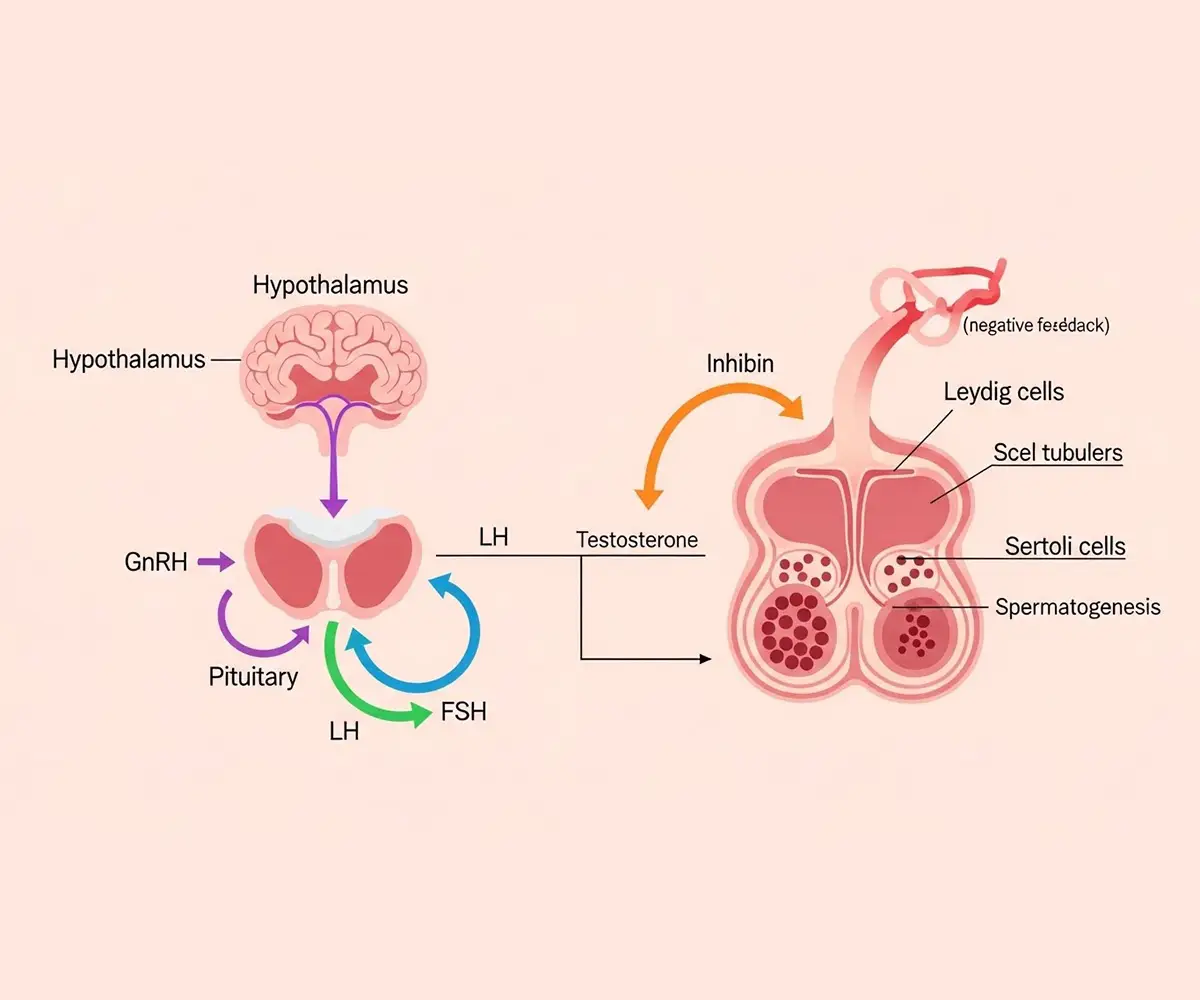
To understand how to protect fertility, we must first understand why TRT threatens it. The male hormonal system operates on a feedback loop known as the Hypothalamic-Pituitary-Gonadal (HPG) Axis.
- Normal Function: Your brain (hypothalamus and pituitary gland) senses low testosterone and sends two signal hormones to the testes:
- LH (Luteinizing Hormone): Tells the testes to make testosterone.
- FSH (Follicle Stimulating Hormone): Tells the testes to make sperm.
- On TRT: When you introduce exogenous (external) testosterone—whether through injections, creams, or pellets—your brain detects that testosterone levels are high.
- The Shutdown: Thinking the job is done, the brain stops sending the LH and FSH signals. Without LH, your natural testosterone production stops (testicular atrophy). Without FSH, sperm production (spermatogenesis) shuts down.
The Result: Most men on standard TRT monotherapy (testosterone only) will see their sperm count drop significantly, often to near-zero (azoospermia), within 3-6 months.

The Solution: HCG and Gonadorelin
The “sterility” caused by TRT is usually reversible, but preventing it is far better than trying to reverse it. This is where ancillary medications come in. By using specific compounds alongside testosterone, we can “backfill” the signals that the brain has stopped sending.





Human Chorionic Gonadotropin (HCG)
HCG is the gold standard for fertility preservation on TRT.
- How it works: HCG mimics Luteinizing Hormone (LH). It acts directly on the Leydig cells in the testes, keeping them active and producing intra-testicular testosterone.
- The Benefit: This maintains testicular size and function. While HCG primarily mimics LH, the high levels of intra-testicular testosterone it stimulates are often enough to maintain sperm production in many men, even without the FSH signal.
Gonadorelin
Gonadorelin is a newer option often used when HCG is unavailable or cost-prohibitive.
- How it works: It mimics Gonadotropin-Releasing Hormone (GnRH), stimulating the pituitary gland to release both LH and FSH naturally.
- The Benefit: It attempts to keep the upstream signal alive, preserving the entire HPG axis.
Compounded Options: Customizing the Protocol
This is where the advantage of a Florida-based compounding pharmacy becomes clear. Standard commercial pharmacies typically only offer “cookie-cutter” TRT (e.g., a standard vial of testosterone cypionate). Compounding allows for sophisticated, fertility-friendly protocols.
- Combination Therapies
We can compound protocols that integrate fertility support. While HCG is usually injected separately, some providers utilize specific blends or carefully timed protocols to ensure compliance.
- Cream vs. Injection
For some men, the delivery method matters.
- Injections: Typically cause a more profound suppression of LH/FSH because they create high “peaks” of testosterone.
- Transdermal Creams: Compounded testosterone creams (applied to the scrotum) mimic the body’s natural daily rhythm better than weekly injections. Some clinical evidence suggests that creams may be less suppressive to the HPG axis than injections, making them a preferred option for fertility-conscious men.
The "Washout" Period: Reversing Infertility
What if you have been on TRT for years and now want to conceive? Is it too late?
In most cases, no. The testes are remarkably resilient. The protocol for restoring fertility typically involves:
- Stopping TRT: Removing the exogenous testosterone.
- PCT (Post Cycle Therapy): Using medications like Clomiphene (Clomid) and HCG to “kickstart” the body’s natural production.
- Time: It takes about 72-90 days for a sperm cell to mature. Therefore, men should expect a 3-6 month “washout” period before sperm counts return to fertile levels.
Hormone Replacement Therapy
Bioidentical hormone replacement therapy (BHRT) is one of the most common applications of pharmaceutical compounding. Both men and women experiencing hormone imbalances can benefit from customized hormone formulations.
For women, compounded BHRT can address symptoms of menopause, perimenopause, and hormone deficiencies. Pharmacists can create personalized combinations of estrogen, progesterone, DHEA, and other hormones in forms such as creams, gels, capsules, or sublingual troches. These bioidentical hormones are molecularly identical to the hormones produced by the human body, potentially offering better tolerability than synthetic alternatives.
Men seeking testosterone replacement therapy can access compounded testosterone in various forms, including injections, creams, and gels. Compounding allows for precise dosing adjustments and the ability to combine testosterone with other supportive compounds. Advanced Scripts also offers specialized formulations like enclomiphene for men seeking to support natural testosterone production and fertility.
FAQ: Common Questions from Florida Men
01. : Can I get my partner pregnant while on TRT?
Yes. TRT is NOT birth control. While it lowers sperm count, it rarely guarantees zero sperm. “Low fertility” is not “sterility.” If you do not want to conceive, you must still use contraception.
02. Will HCG make me feel different?
Many men report feeling better on TRT + HCG than on TRT alone. The preservation of testicular function often leads to better libido and a greater sense of well-being, likely due to the maintenance of other neurosteroids produced by the testes
03. Is compounded testosterone safe?
: Yes, when sourced from a 503B or high-quality 503A pharmacy. Compounded testosterone is bioidentical to the testosterone your body makes. It is chemically indistinguishable from brand-name products but allows for custom concentrations (e.g., 200mg/mL vs 100mg/mL) and carrier oils (e.g., Grapeseed vs Cottonseed) to avoid allergies.
Conclusion
You do not have to choose between your vitality and your fertility. With a sophisticated, medically managed protocol that includes HCG or Gonadorelin, Florida men can enjoy the benefits of optimal testosterone levels while keeping their options for fatherhood open.
At Advanced Scripts, we specialize in men’s health protocols that look at the whole man—not just a number on a lab test.
Disclaimer: This article is for informational purposes only and does not constitute medical advice. Fertility protocols require strict medical supervision.